Showing posts with label actions. Show all posts

Wednesday, July 15, 2009

pesticide deaths

One of the most frustrating things about the pesticides conversation is how the lens focuses mostly on the consumer. If it doesn't hurt too many end users too much, then it can stay on the market. The main deviation from this framework comes from environmentalists, who say we must protect the places growing this food, keeping the ecosystems free from poisons. Little regard is given to the workers who endure exposure to pesticides day after day, either from consumers and environmentalists in the US or the companies spraying their fields.

This me-centered approach leads to lists like one developed by the Environmental Working Group, (mentioned in my strawberry post), called the "dirty dozen" and the "clean 15." The fifteen fruits and veggies less likely to have traces of pesticides are considered safer for consumers to eat when not organic. However, does that mean the workers aren't affected by these same chemicals? I doubt the lists would make a difference for them.

I'm grateful for the EWG resource, and I think it's likely their strategy is meeting consumers where they are instead of pushing an activist agenda. It's also important to give options to families who cannot afford an organic-only shopping cart, so they can protect themselves from the highest chance of pesticide exposure. However, it's tragic we don't hear more about how agricultural worker's lives are ruined by pesticide exposure.

What do I mean by "ruined"- have I exaggerated my language with my frustration? Absolutely not. Right now my partner and some other good friends are working in a community where the chemical sprayed on the sugar cane is causing kidney disease. Many of the men in the area are either dead or dying from an entirely preventable situation.

The cane is processed into Nicaraguan rum, called Flor de CaƱa, which the World Bank has supported with loans despite mounting pressure from families of the deceased. Watch the trailer of The Affected for more details on this breech of justice, and check out their thorough reading/film list under "learn more." One of the most striking quotes on the site, in my opinion, is "the Trade and Environmental Database refers to the use of DBCP as a "circle of poison" in which US-banned pesticides are shipped internationally and sprayed on crops which are then shipped back to the US for consumption."

Creating safer jobs, and educating Nicas and Americans about these issues, are some of the ways I think we can combat these types of abuses. No one is safe, consumers and workers alike, until our food is free from all banned chemicals.

(our friend Darwin at the entrance to his organic coffee cooperative, named "Green Gold," in the Nicaragua cloud forest preserve MiraFlor)

Thursday, July 2, 2009

spaces

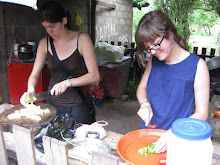
(a potluck at Blackbird Gardens with Community Supported Agriculture (CSA) members and their families, circa spring 2007)


Where do we talk about food? Executive boardrooms, and Congress, and hopefully our dinner table. Where do we talk about social justice? In books, and blogs, and hopefully community potlucks.

But if we're talking about food and justice in general, I think it makes sense to have these conversations in a garden. The idea came to me while weeding the cilantro rows with Elena and Ken. With busy hands and relaxed minds, somehow the setting allowed us to dive deep into topics of gender, race, and sexuality.

One downside of working and talking, in any type of work, is that we soon came to the end of the task and needed to trellis tomatoes. However, because garden space is always in flux, it provides an evolving setting through the season for your conversations.

I often attended events hosted by the Interfaith Council for Peace and Justice when I lived in Ann Arbor. They had "dinner and movie" nights for a variety of topics, from nuclear disarmament to the US tax-payer role in massacres in Latin America to food accessibility. What if the movie and semi-facilitated processing conversation at the end was followed by 10 minutes or so of gardening?

Community members could finish their dialogs while doing something productive. Growing food releases feelings of anxiety about the control corporations and the government have on our lives. Why not give it a try the next time you host company? You might get a lot done in your garden.

Thursday, June 25, 2009

strawberries

It's about strawberry season in our northern region, which means I'll soon be heading to a u-pick field to load up my freezer, (after eating a few quarts fresh of course). Unfortunately we don't grow strawberries at my dad's farm, so I'll have to find a neighbor who doesn't spray unnatural poisons on their crops.

I'm concerned about this because this is one fresh produce item you do not want to purchase unless it's organic. Strawberries are consistently on "dirty dozen" lists for what never to buy conventionally grown. Even if the grower isn't certified organic, you should at least talk to them about what they used to produce their berries. If they haven't been thinking about the dangers of pesticides and herbicides from large chemical corporations until this point, maybe your questions will spark some dialog on their farm.

There's a website where you can see exactly which toxins most strawberries contain. In fact, you can search "what's on my food" for most basic food ingredients. Plus, they make it easy to take actions and stay informed about this issue. Anyone who eats food should be familiar with this resource!